
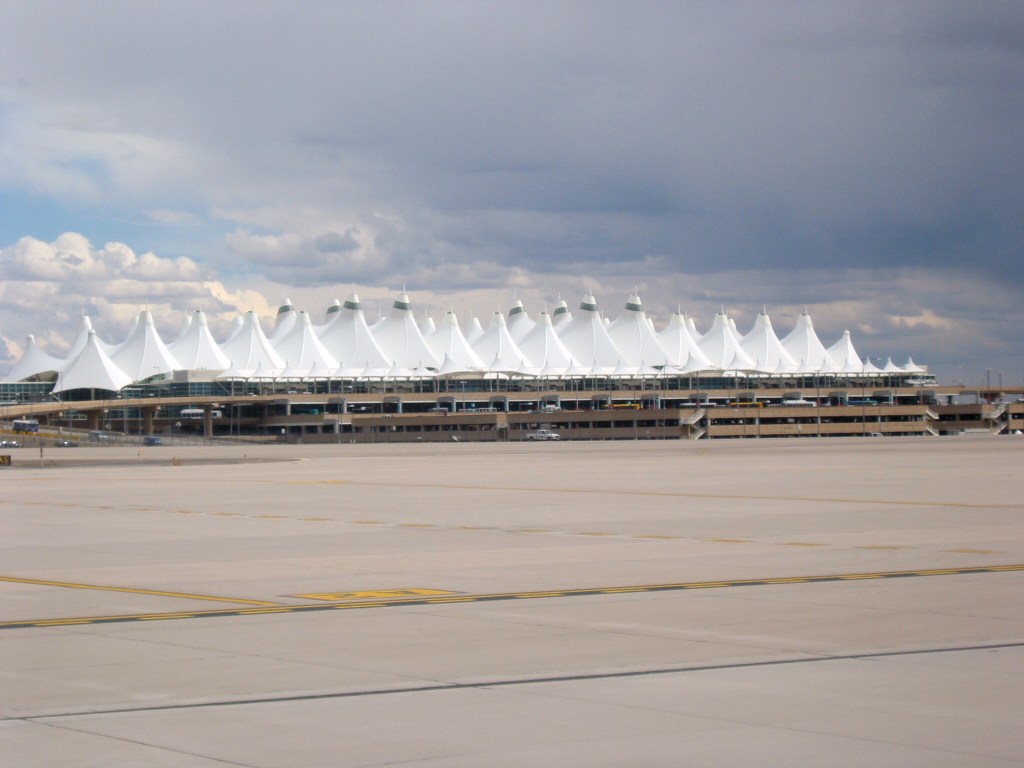
The Denver International Airport as we know it today opened up back in 1995. It was located in the middle of Colorado farmland, very far from downtown Denver, or anything of interest for that matter. Like many airports that start from scratch, they sought to become a prototype for the “airport of the future.” For many of the ideas, including an automated baggage handling system, the future was just a bit too far away from 1995. The automatic system had literally gone off the rails and tended to inadvertently launch or flip bags through the air rather than direct them to their intended aircraft. This is just one small example of how thinking big led to big issues.
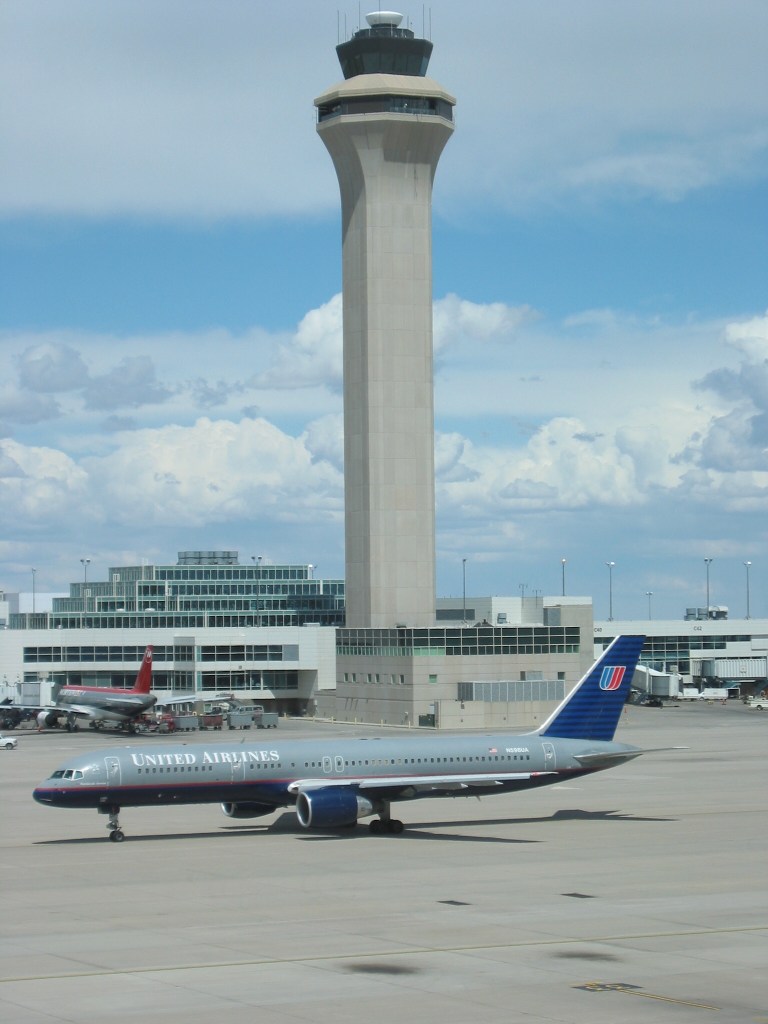
Just over 30 million people passed through Denver International in its first year. Almost double that number went through the airport in 2021, a year that still saw travel hesitancy due to the ongoing pandemic. So while an endless amount of jokes could be made about the baggage debacle at the beginning, the Denver Airport actually wasn’t all that bad. It was spacious, ambitious, relatively clean, often forward-thinking, but not forward thinking enough to accommodate the volume of passengers it currently sees.
If everything is working perfectly, Denver’s airport can provide a decent experience. I used to think it was pretty decent for a major international airport. Its main terminal building is architecturally interesting. “Look at those tents!,” I remarked during my first visit in 1996. “I think those are supposed to represent the mountains,” replied my mother. There are plenty of food options and I appreciate the high ceilings which give the illusion of more space. And that’s the bizarre thing about Denver’s design. They chose to build in the middle of nowhere, but really failed to take advantage of that space in an efficient manner.
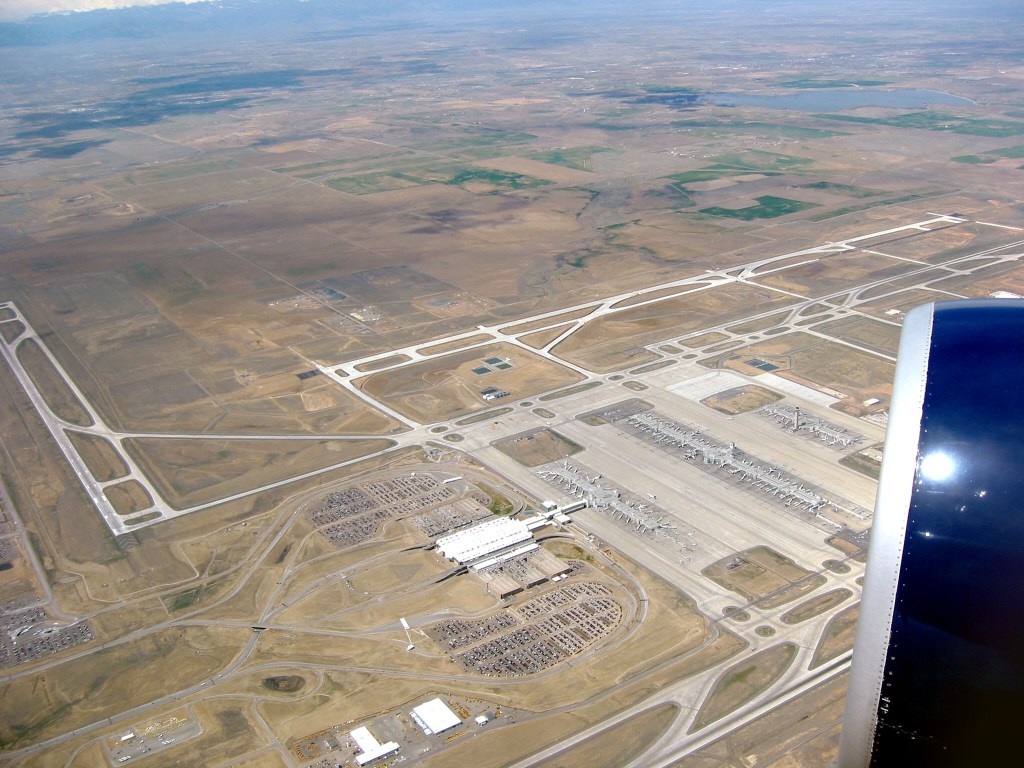
For reasons that defy logic, there is ostensibly only one security screening area — inside the main terminal building. This has led to major headaches in the screening process with lines often wrapping well beyond the ropes that were meant to contain them. It is a major design flaw for a modern airport. LAX, in stark contrast to Denver, is surrounded on all sides by the cities of El Segundo, Westchester, Playa del Rey, and the Pacific Ocean. It has no room to expand. And yet, its horseshoe design enables eight individual terminals to each have their own security checkpoint. At no point in the 15+ years that I’ve lived there, have I taken more than five minutes to go through security. It defies logic that the designers of Denver’s airport thought a single entry checkpoint was the absolute best idea. Perhaps they thought this was more efficient, but this single checkpoint funnels everyone to Denver’s second issue. The train.
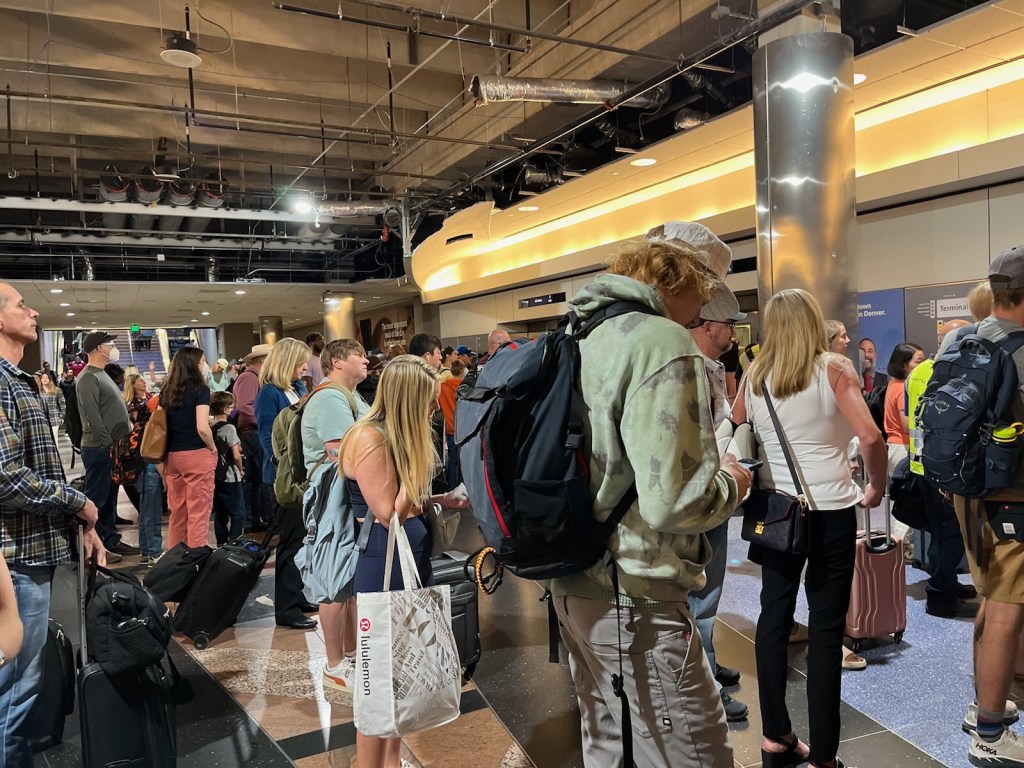
It is an age-old question. How do we get passengers between the terminals? Chicago O’Hare and Detroit thought it prudent to go with a pedestrian tunnel with fun dancing lights. Washington Dulles went with some weird elevated bus thing. Many others, however, have chosen some sort of train. I firmly believe this is less from a practical standpoint and far more a sort of status thing. “Trains make an airport cool,” is probably as far as they got in the meeting that day. The problem with a train is that trains break. An airport like Atlanta has a train, but if the train fails, you can walk between terminals parallel to the train’s path. It will just take you a while. Denver did not come up with this contingency. If the train breaks, everything falls apart. Passengers would either be stuck or have to get special escorts to go through emergency tunnels. I’m sure there’s a conspiracy theory about all this somewhere. Oh, you haven’t heard?
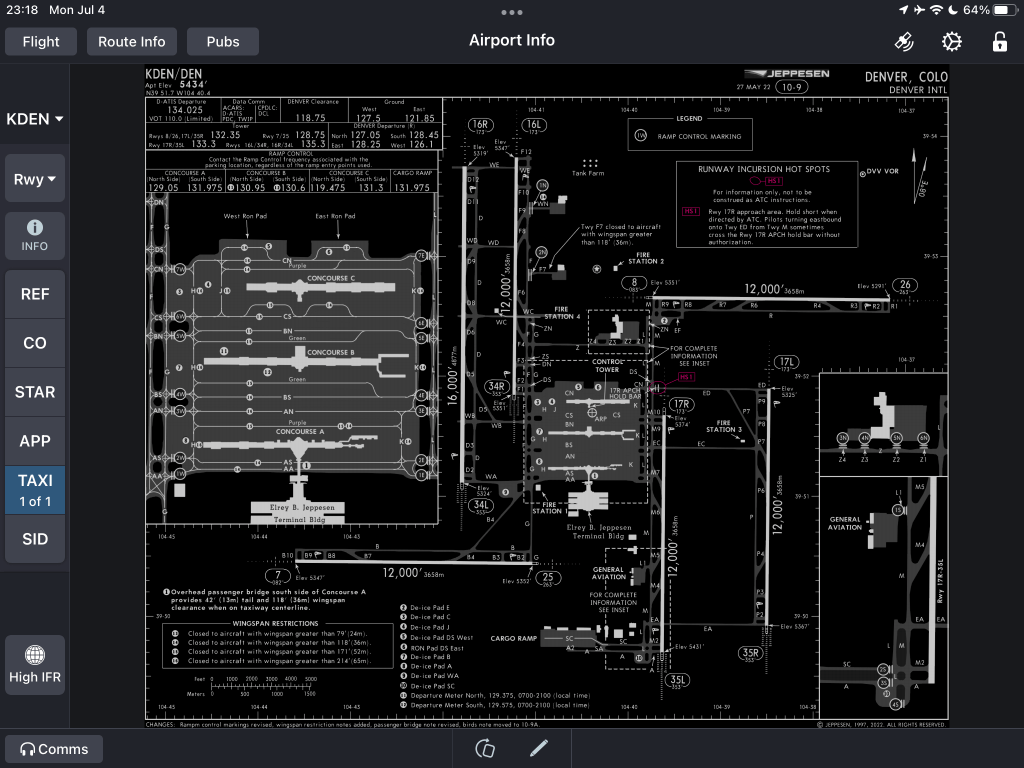
Denver’s geographic location has made it a rather strategic hub to the western states. Yet, that very location comes with its share of challenges, one being its altitude. One thing they did right was create absolutely massive runways — which enable even the largest jets like the A380 (an aircraft that hadn’t even been designed yet when the airport opened) to takeoff fully loaded on a hot day at an airport that is a mile above sea level without any issue. The runway array has sparked a few conspiracy theories. People say it was purposely designed as a swastika. There are two east/west runways, and four north/south runways. The airport diagram is above. I mean if you want to really see a swastika in there, you can, but that’s a bit of a stretch. Denver seems to have been fodder for all kinds of conspiracy theories — many involving Illuminati and new world order nonsense, but have evolved to accommodate more trendy topics like Q-Anon. One of the more recent ones involves some of the airport’s artwork, which was heavily edited by someone with lots of time on their hands to show children wearing masks as if the airport had somehow confirmed that the pandemic was “engineered” and predicted back in the 90s. Cool. That creepy horse on the outside of the airport is doing nothing to assuage anyone’s fears, though.

To its credit, Denver is trying to adapt to the changes. They now have a train going all the way from downtown Denver to the airport. Snowstorms that used to take the airport out for a week back in the 90s are now dealt with in less than a day thanks to improvements in how they deal with extreme weather. It wasn’t that long ago that heavy snow collapsed parts of the iconic roof. Most importantly, they are looking to expand the terminals and are working on ways to improve security efficiency. While that is all happening, they’ve really leaned into the fact that half the country seems to subscribe to at least one conspiracy theory involving the airport.

I really hope they can improve upon all the issues that have been festering for the last thirty years. Because right now, the airport seems a lot more crowded than it really is. It has led to some major inefficiencies that put it in the same category as Newark, an airport that just never seems to get it together. Let us hope that Denver doesn’t get that bad. But Denver is really just one of many U.S. airports that could previously be seen as “not too bad” and has been collapsing under a volume of passengers it was never designed to handle. Austin-Bergstrom, Orlando, and Las Vegas are just a few I can think of that need to do something big . . . fast if they want to keep up. Perhaps they need to hire the Illuminati and Freemason contractors from Denver to secure the proper funding for these kinds of things.
 Flyin' Brian