
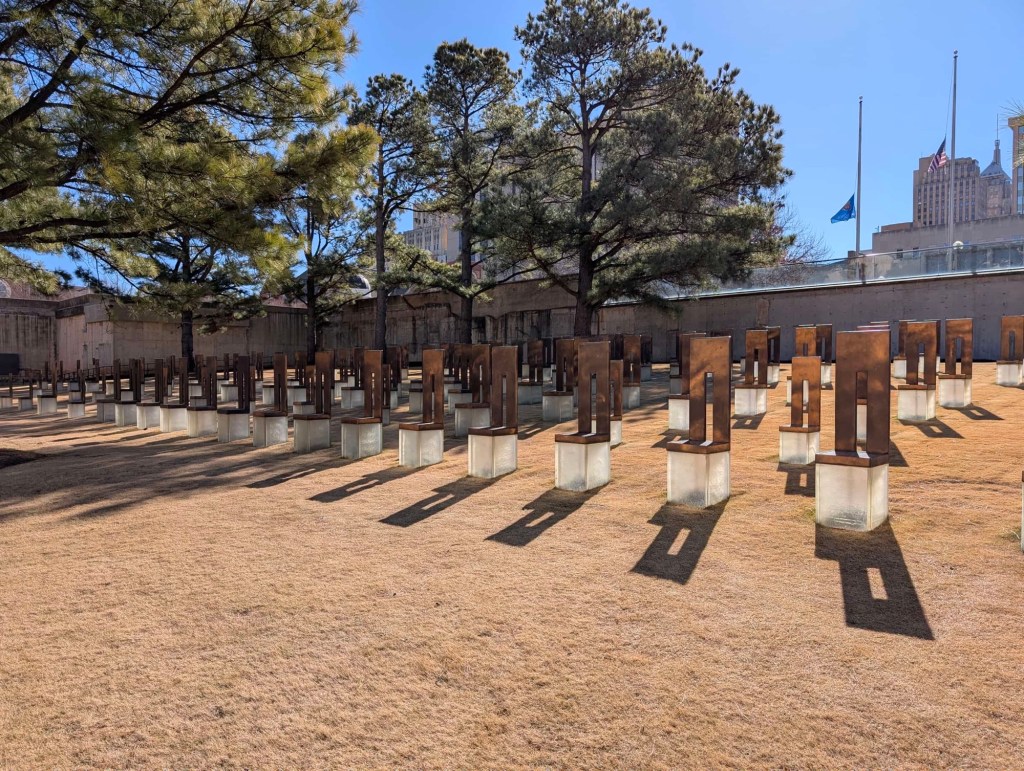
It appears that I am averaging one post every nine months. They keep scheduling me on these silly overnights for the past few months and I really don’t care for them. More often than not, I tend to get sick about two days after staying in these hotels, and then I become rather cross and inconsolable. Recently, however, I stayed in Oklahoma City, Oklahoma at the Fordson Hotel which was decorated eccentrically.
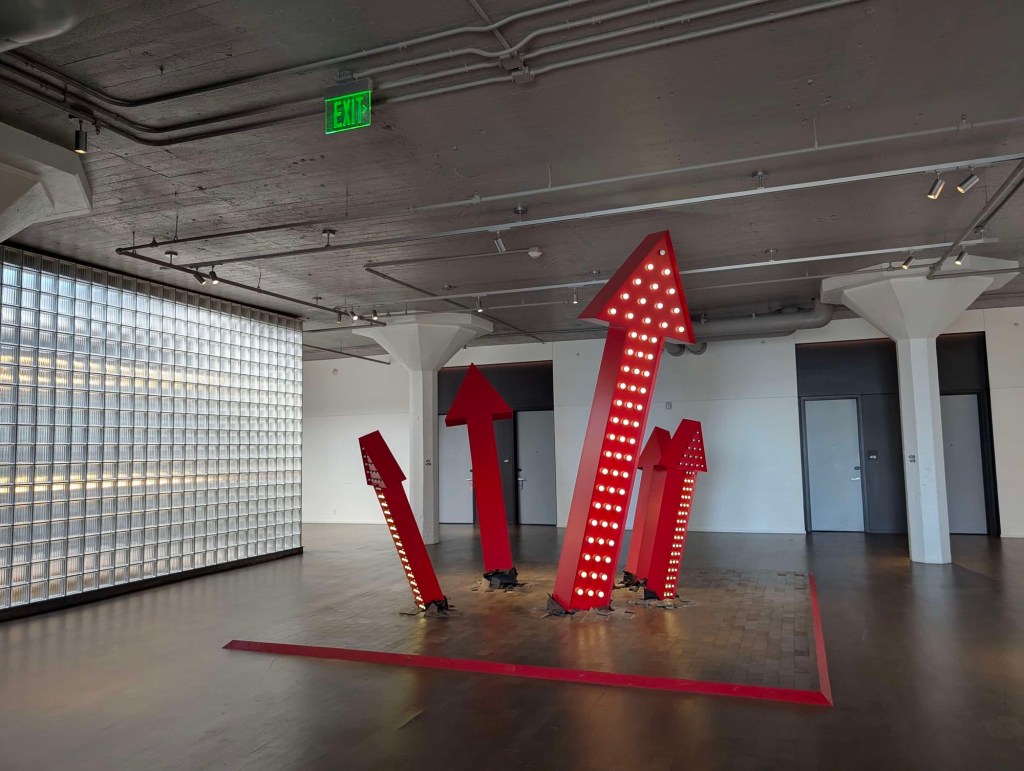
This post is not about the hotel, though. We arrived late in the evening, but would not have to report until around 2pm the following day. I used the time off in the morning to walk to the Memorial of the Oklahoma City bombing, about one mile from the hotel. My original intent was to just pay a visit to the memorial, as the nearby museum was $18, but upon further reflection, and the fact that I don’t expect to find myself in Oklahoma City again anytime soon, I found it prudent to add the museum as well.
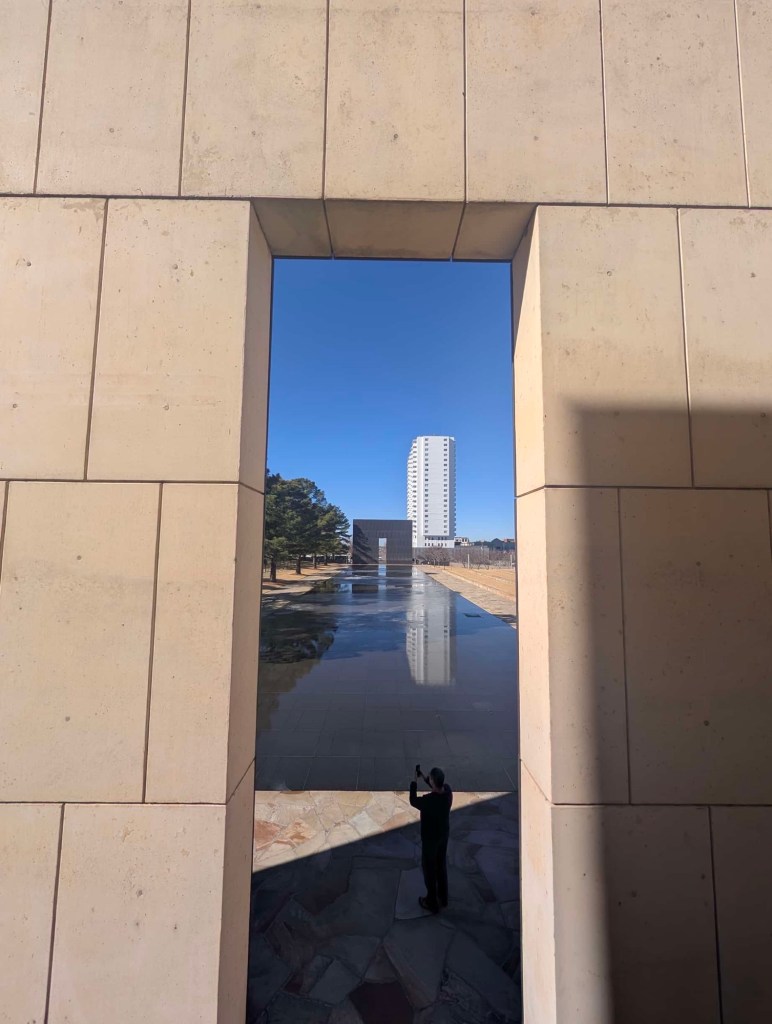
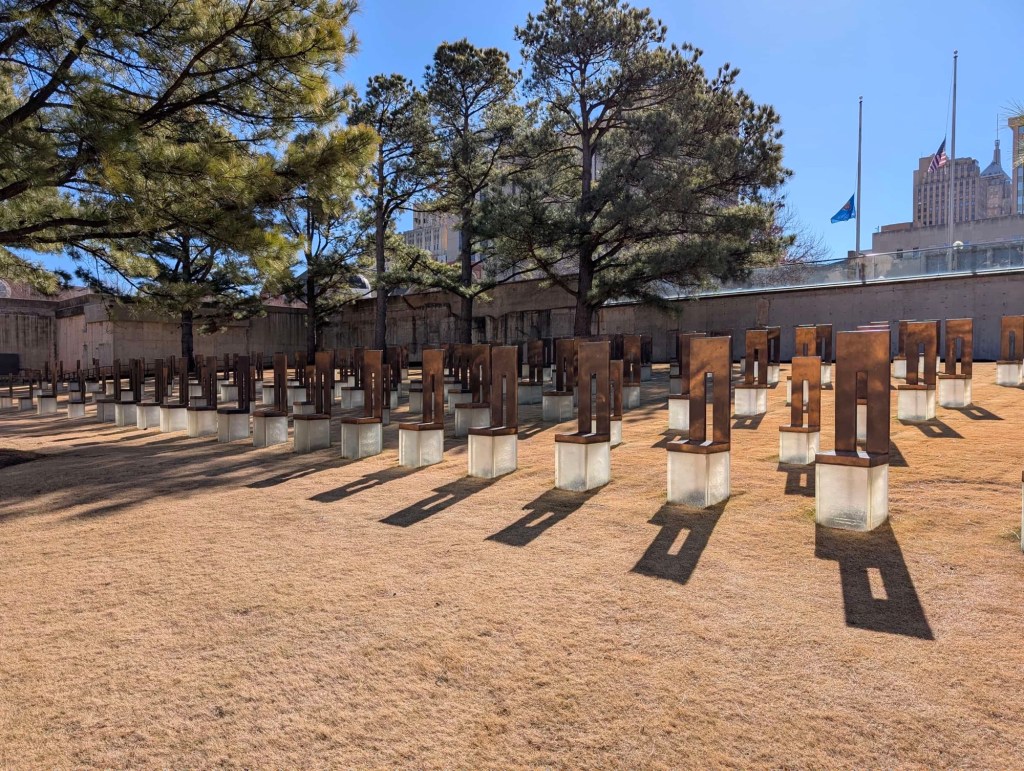
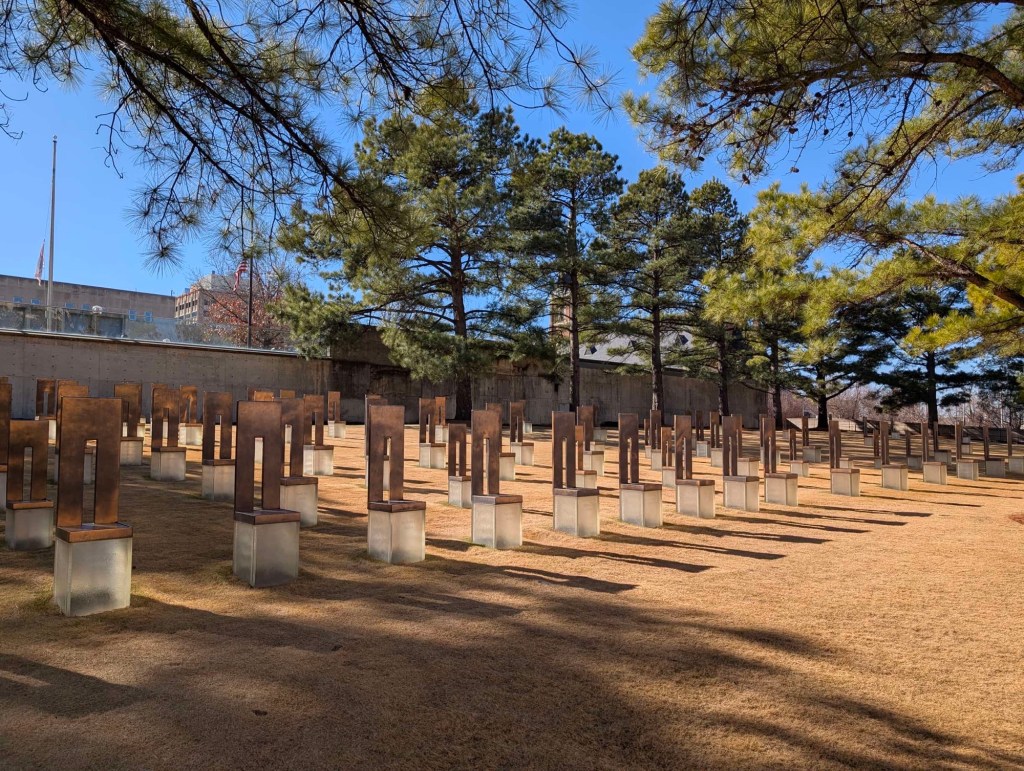
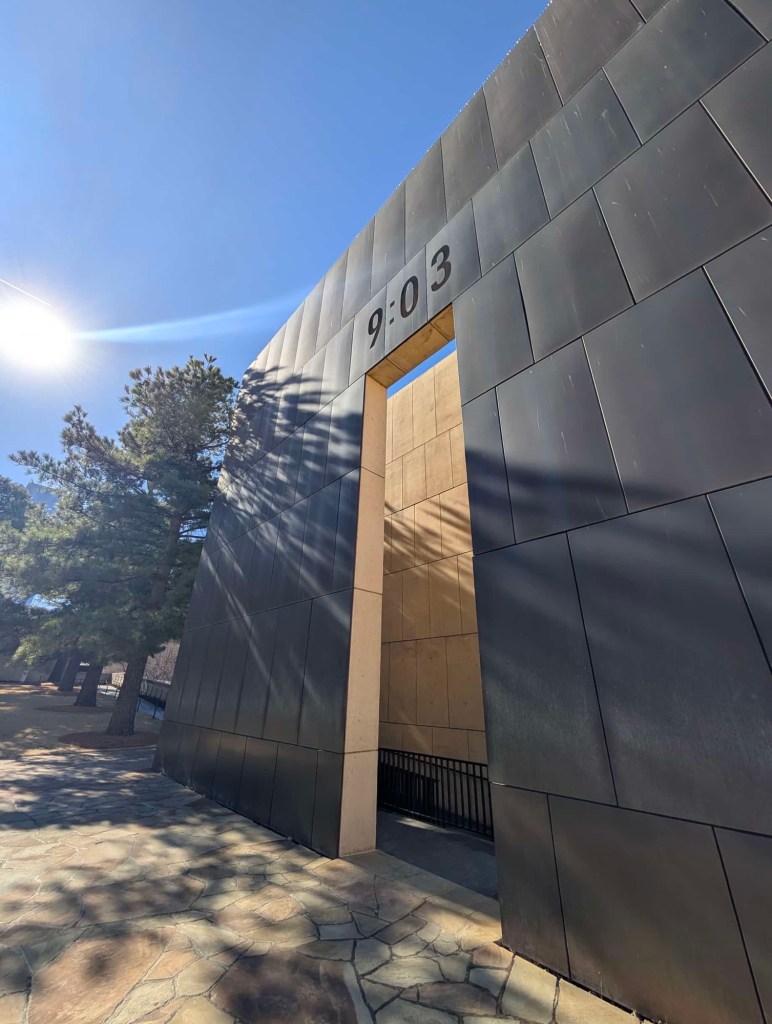
The memorial itself has a reflecting pool separating two large gates with the inscriptions “9:01” and “9:03.” The bomb went off at 9:02 and the times are symbolizing the time before and after and how lives were changed. Empty chairs lining the lawn adjacent to the pool represent all those killed in the attack — 168 being the final accepted tally. The museum was well worth the admission price and very well done. It opened with some context about America in 1995 — setting the stage if you will with references to O.J. Simpson, pagers, and large cell phones.
Then I entered a room with a door labeled the Oklahoma Water Resources Board, a facility that was once across the street from the Murrah Federal Building. The door automatically closed behind me. A recording device was playing on the table as I listened in to a seemingly boring meeting as a woman outlined the procedures of the day. The meeting had begun at 9:00am. As she continued to breakdown the day, she was abruptly interrupted by a deafening explosion. 168 images of those killed appeared on the screen on the far wall, as the recording device continued to record panic and confusion as the woman directed people to exits. Another door opened to a section of the museum showing the destruction.
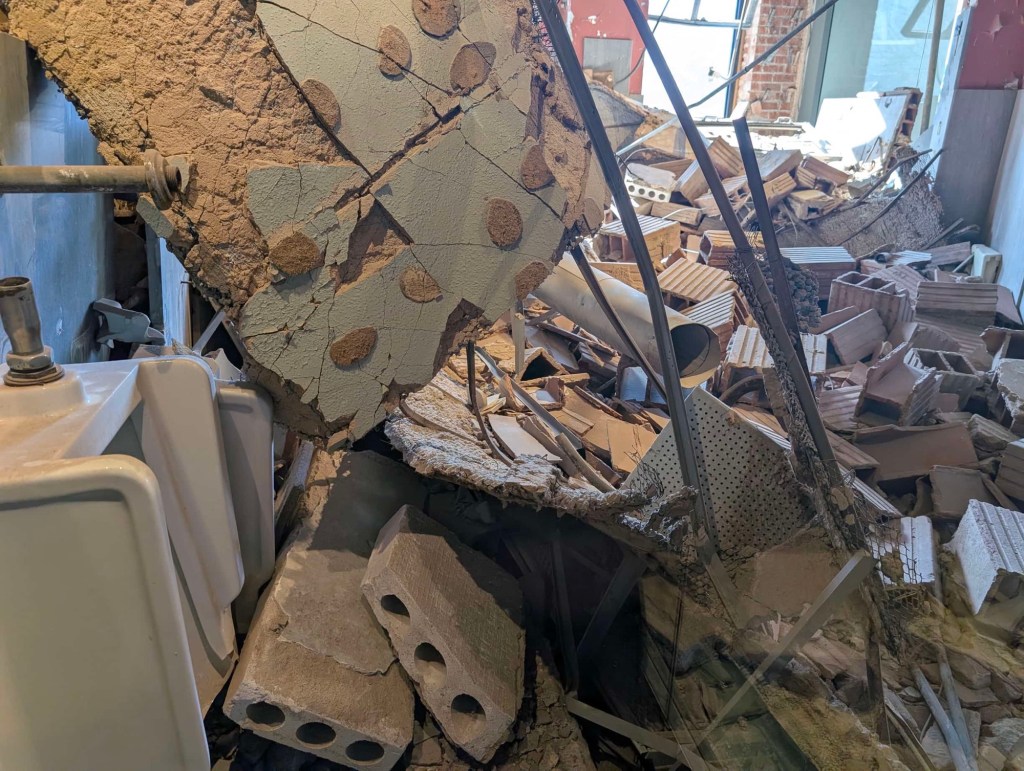
The bomb was very powerful — destroying or damaging 300 nearby buildings, breaking windows all over Oklahoma City, and was felt more than 30 miles away. Chaos naturally ensued and preliminary opinion pointed to radical Islamic terrorists. Others were more restrained in their assessment. No stranger to right wing extremists in his own state of Arkansas, President Clinton suspected there was more to the story. As the investigation got under way, it did not take long to apprehend its primary suspect —Tim McVeigh, who had already been arrested for missing license plates and illegal gun possession just days after the bombing.
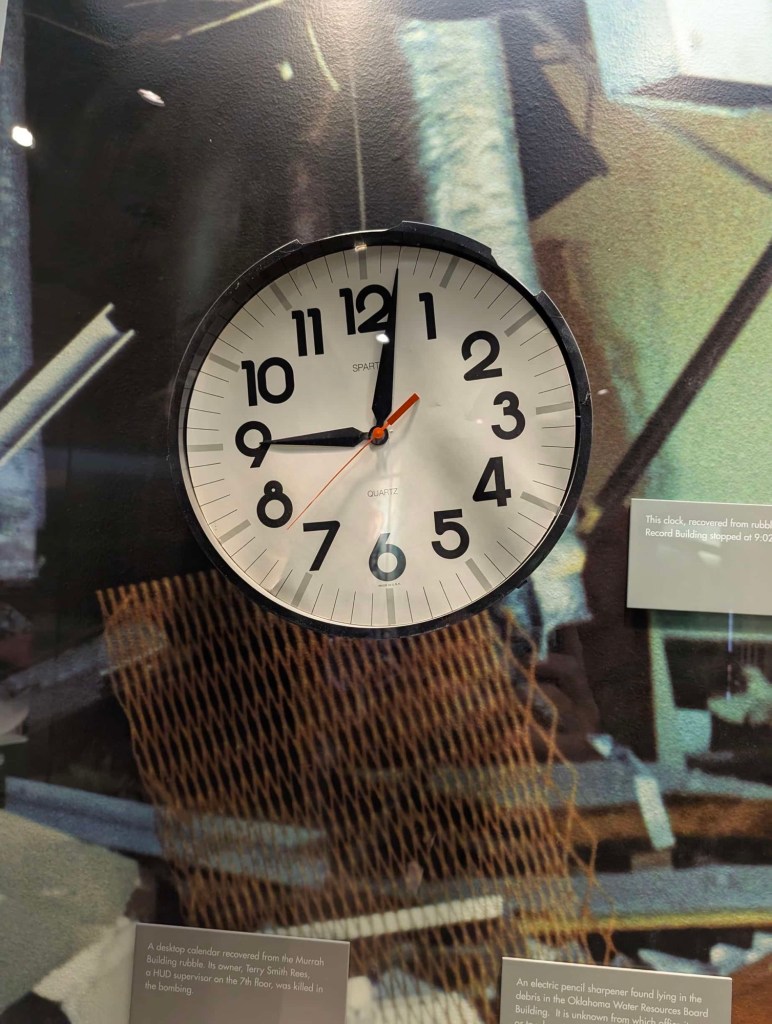
At the time, I was nine years old, but I vaguely remember a TV being rolled into the classroom as our small brains tried to make sense of it. I remember thinking how horrible it was and couldn’t understand why someone would do this. Over the coming years, my feeling was that McVeigh was kind of a one-off. As in, he was evil, but by no means representative of some larger group of people. But as the museum shifted its focus in later exhibits from tales of survival and heartbreak to the investigation and the trial, synapses in my brain started firing.
McVeigh’s justification for the attack was government overreach. He was furious about the FBI’s bungling of the Waco operation and even more upset about Clinton’s assault weapons ban. He fancied himself a sort of patriot of the constitution (mostly the second amendment). He was racist, a misogynist, and a narcissist. A former soldier in the U.S. Army, he had the opportunity to become a Green Beret, but gave up on the second day after a five mile march was too much for him. Rather than admit his own shortcomings, he told others that the special forces unit didn’t actually interest him anyway. When he dropped out of college, he said it was because the teachers didn’t know as much as he did.
Most people would agree that he was a terrible human being, but under the lens of 2025, “most people” is probably now just a slim majority. His beliefs and statements seem radical (because they are), but his world view has ostensibly been rehashed by Trump in his hijacking of the Republican Party. While it was McVeigh who ultimately parked the Ryder truck containing the bomb in front of the Murrah building, there were others involved. Terry Nichols and Michael Fortier shared his political sentiments. While both men shied away from involvement in the final hour, they still supported McVeigh and knew what he was about to do.
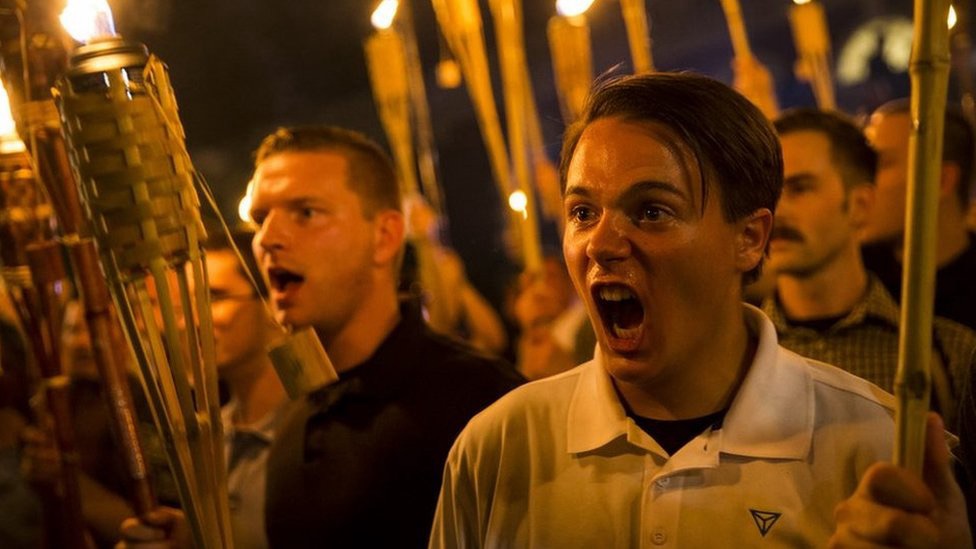
In 1995, McVeigh didn’t have facebook, or truth social, or twitter (which for some reason we have to call “x” now.) It was harder for him to find like-minded individuals, but they were always out there. His only real like-minded contacts were made at gun shows. Rarely hanging on to any consistent work, he spent most of his time listening to Rush Limbaugh and other extreme right wing personalities. 24 hour news was still in its relative infancy and people generally still watched or listened to legitimate news sources, not those shouting opinions and propaganda at their audience. There was no Fox News, no MSNBC, and certainly no OAN, Newsmax, and others. You would not expect to hear Tom Brokaw or Peter Jennings espousing “Replacement Theory” – the belief that America’s whites are being systematically replaced by nonwhites or *gasp* the Jews! But this very conspiracy theory was peddled unashamedly by former Fox News host Tucker Carlson as recently as 2022.
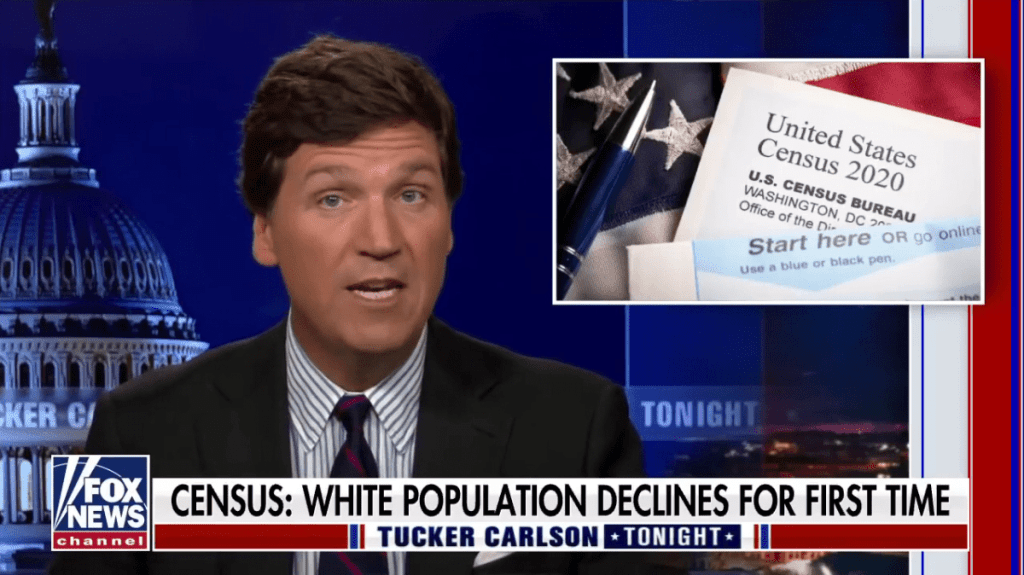
McVeigh’s thoughts are not uniquely evil. They have gone mainstream. He hated immigrants (legal or otherwise), felt black people were given special treatment, and felt that democratic leaders were surely going to come for his guns. I’m sure most Trump voters would very enthusiastically agree with those sentiments. McVeigh had a somewhat delusional idea that he was protecting the constitution, which doesn’t really separate him from far right groups like the oath keepers or proud boys who proudly attacked the capitol and law enforcement on January 6th, 2021. They waved their “don’t tread on me” flags believing they were protectors of the constitution while simultaneously taking a dump on it (and in the capitol).
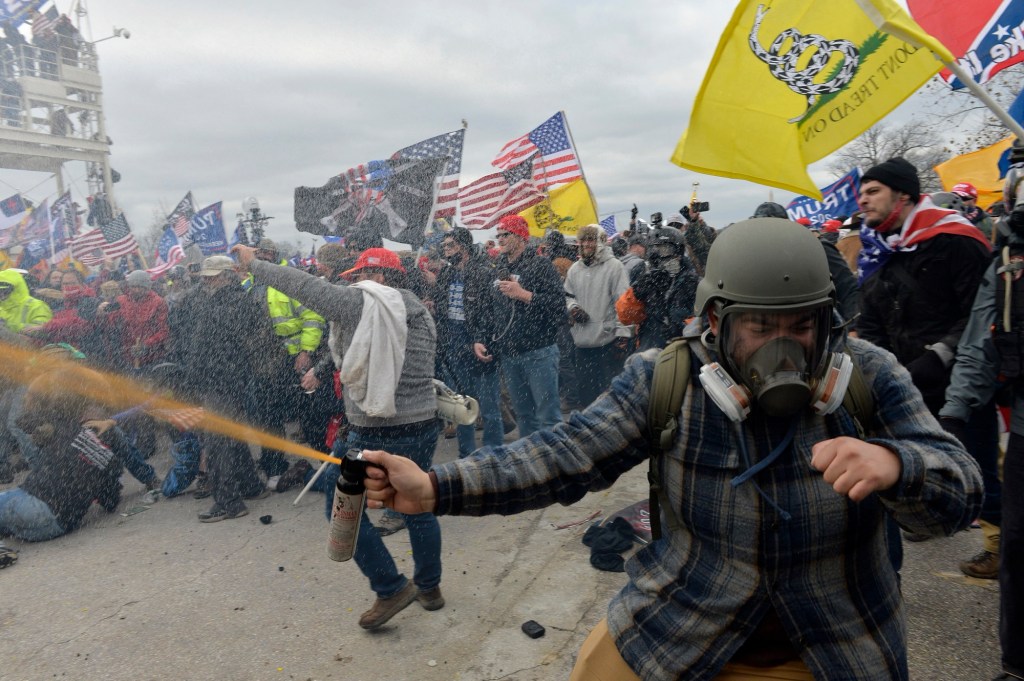
Whilst McVeigh’s actions in 1995 were almost universally condemned, the violence on January 6th divided opinion. One third of the country still believes the 2020 election was stolen for Joe Biden despite copious evidence to the contrary. As we are just days into Trump’s second term, every single person arrested and convicted has been pardoned for their role in the insurrection — many of these were violent offenders who attacked capitol police. But since they all subscribed to a brand of corrupted conservatism that Trump shares and benefits from, all is forgiven. If McVeigh had simply waited a few more decades, perhaps he would have been granted a pardon as well. While his actions were extreme, his views (by today’s conservative standards) were not.
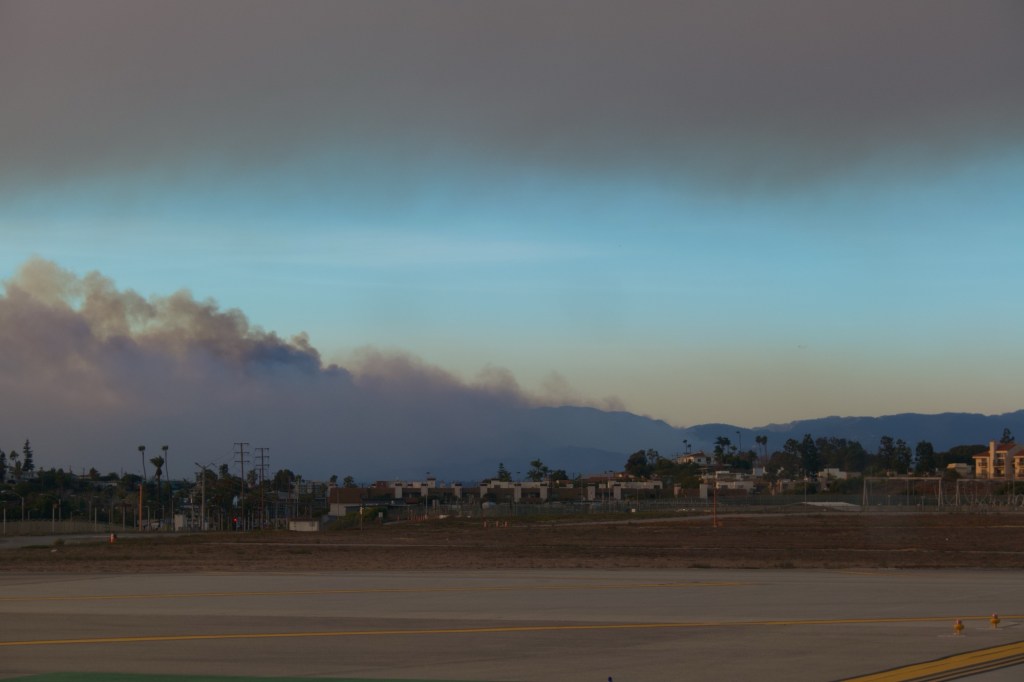
Americans have lost the ability to discern facts from fantasy. Social media has made it easier than ever to spread nonsense faster than it can be fact checked (which is also fading away). When fires swept through Southern California earlier in the month, there was little sympathy from the right (or is it extreme right? . . .honestly not much difference anymore). Misinformation about lack of water, budget cuts, and politics spread faster than the fires themselves. After all, Californians tend not to support right-wing candidates. And because they don’t vote “correctly,” they should be punished, blamed for their own natural disasters, and aid withheld. The Oklahoma City bombing should have served as a much greater warning as to the outcome of such hateful thinking. Sympathy for the victims in Oklahoma City did not require a particular political affiliation, but in today’s America, hate is very strong. It is mainstream, it is celebrated, and it is encouraged from the highest levels of government. History is something that we, Americans, never do a great job of remembering or learning from. McVeigh was seething with hate and didn’t care if he killed innocents or children — collateral damage in his mind. The hate is so widespread and encouraged these days that extreme violence will return again. We should not pretend to be surprised when it comes.
 Flyin' Brian