
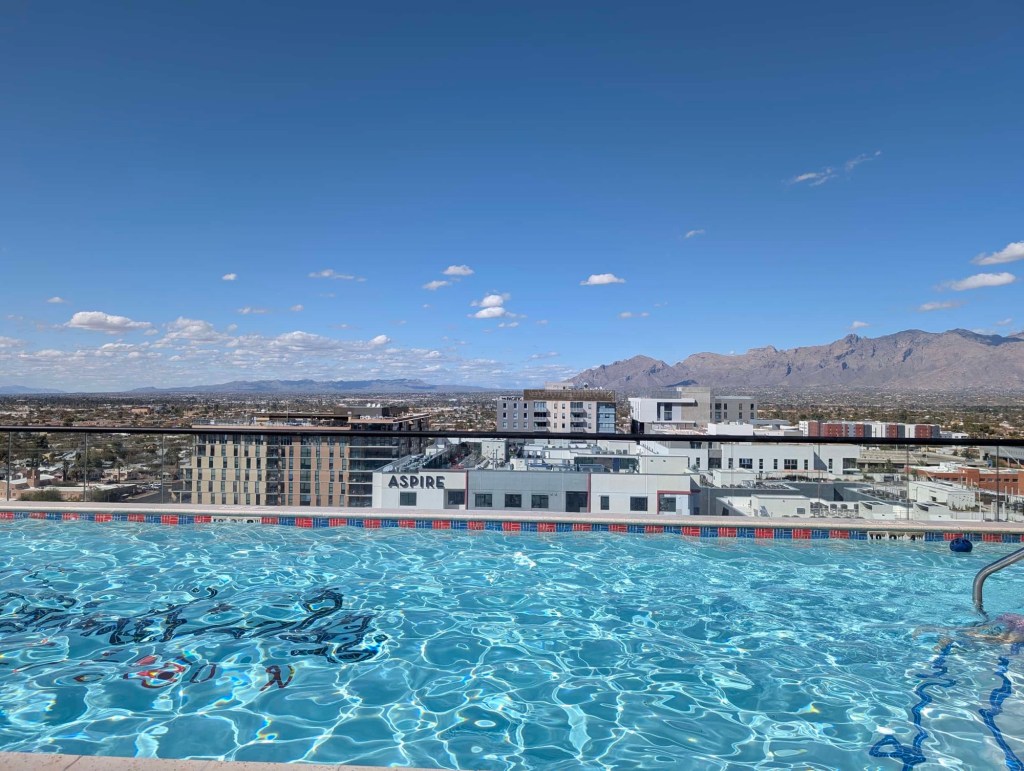
Despite having built up almost ten years of seniority at the airline, my schedule seems to be getting worse. What a fine thank you for my service. With that being said, I was given a 3-day trip with two Tucson overnights back to back. I thusly tried to entice Nicole to join me on this adventure — marking the first time she would have flown with me since I have been captain.
Despite having to wait over 20 minutes to take a shuttle bus from Terminal 5 to the American Eagle remote terminal aka “The Box,” Nicole had no difficulty getting a seat on the flight from LAX-TUS and was even given an upgrade to seat 1D. Nicole didn’t heap as much praise upon me for my landing as I would have hoped. I had to pry the compliments from her mouth like a surgeon, but we all know my landing was like butter.
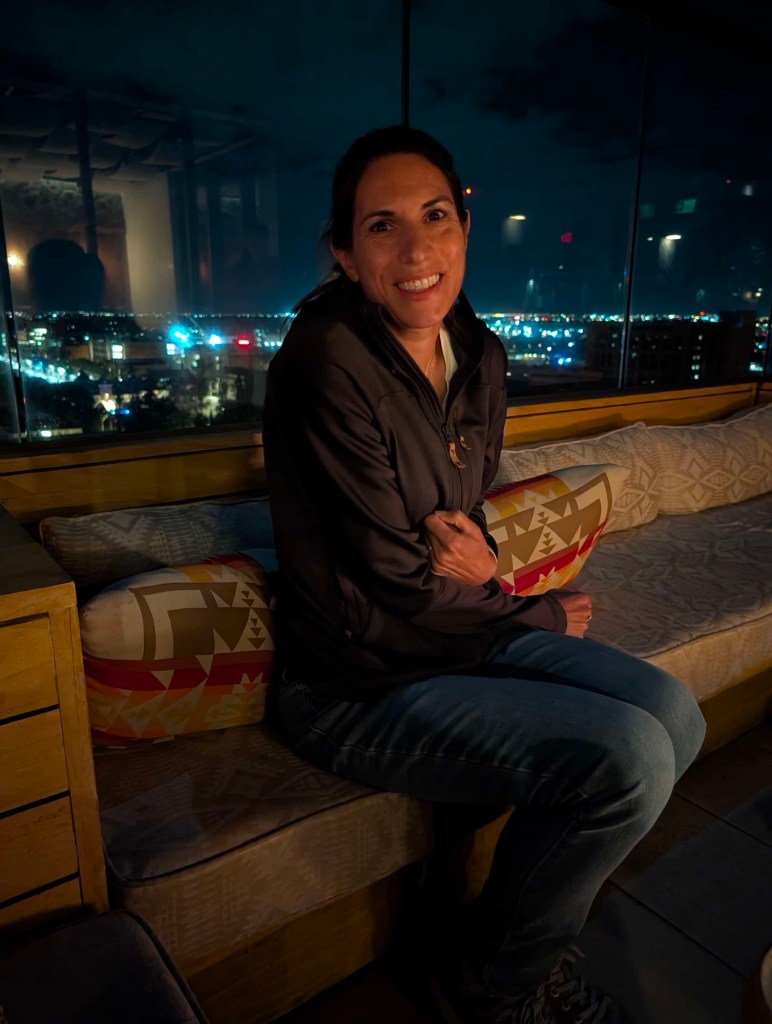
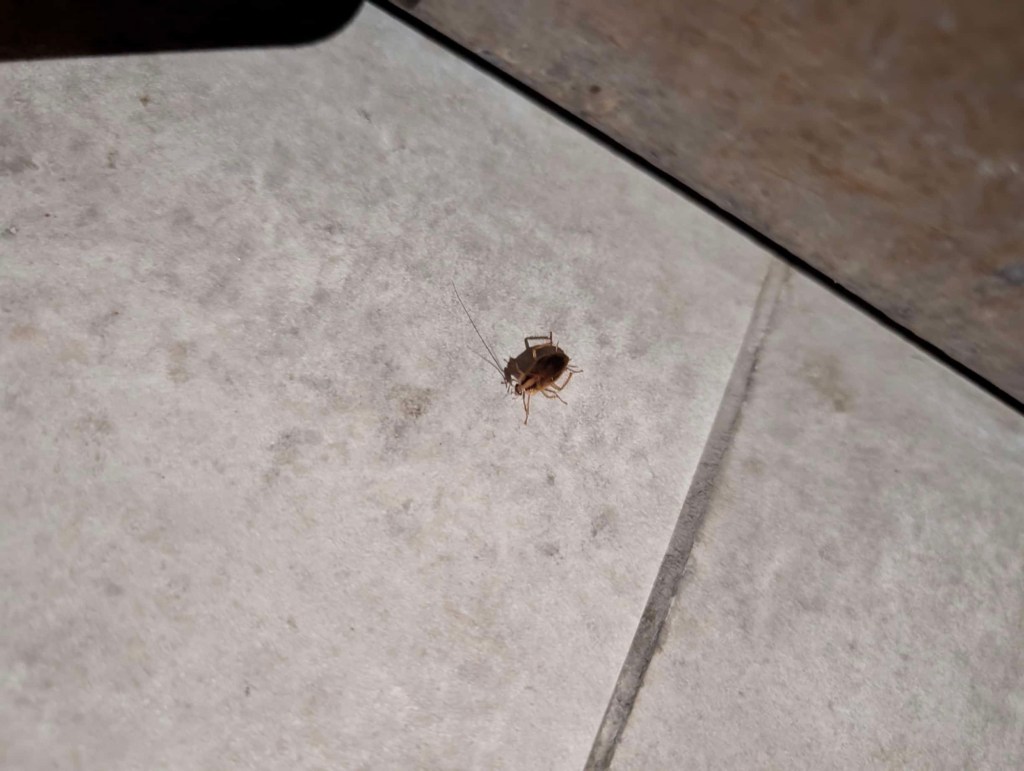
We arrived late in the evening, but after renting a car and driving to the company-provided hotel near the University of Arizona, we went up to the rooftop bar for a late dinner and beverage. It was a nice atmosphere minus the German cockroaches patrolling the premises.
The following day, we drove to Biosphere 2, approximately an hour drive from Tucson. For those not in the know, Biosphere 2 was a pseudo-science experiment beginning in the 1990s to see how humans could operate in a sort of locked-down habitat for a two year period. Without access to the outside world, they would grow their own food, create their own oxygen supply, and test the limits of human adaptability. The only definitive results from this experiment are that humans aren’t very good at a lot of things.
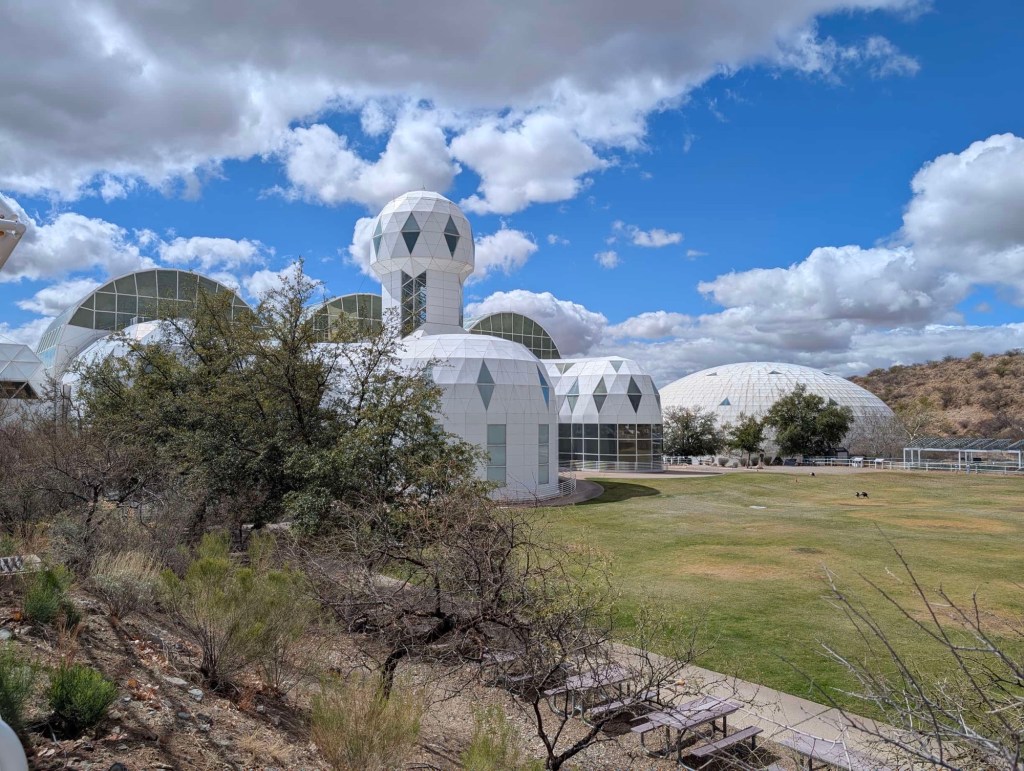
Much controversy came to light because the oxygen levels became quite poor after a year and there was a very high level of carbon dioxide as a result of a design flaw in the building. To keep the eight humans inside the facility healthy, they pumped in oxygen from the outside and also brought in some food to improve their nutrition, but neglected to tell the press of these details until later. In addition to this lack of transparency, tourists also came to look at the humans working at Biosphere 2 and tap on the glass like it was a zoo. None of this was a good look.
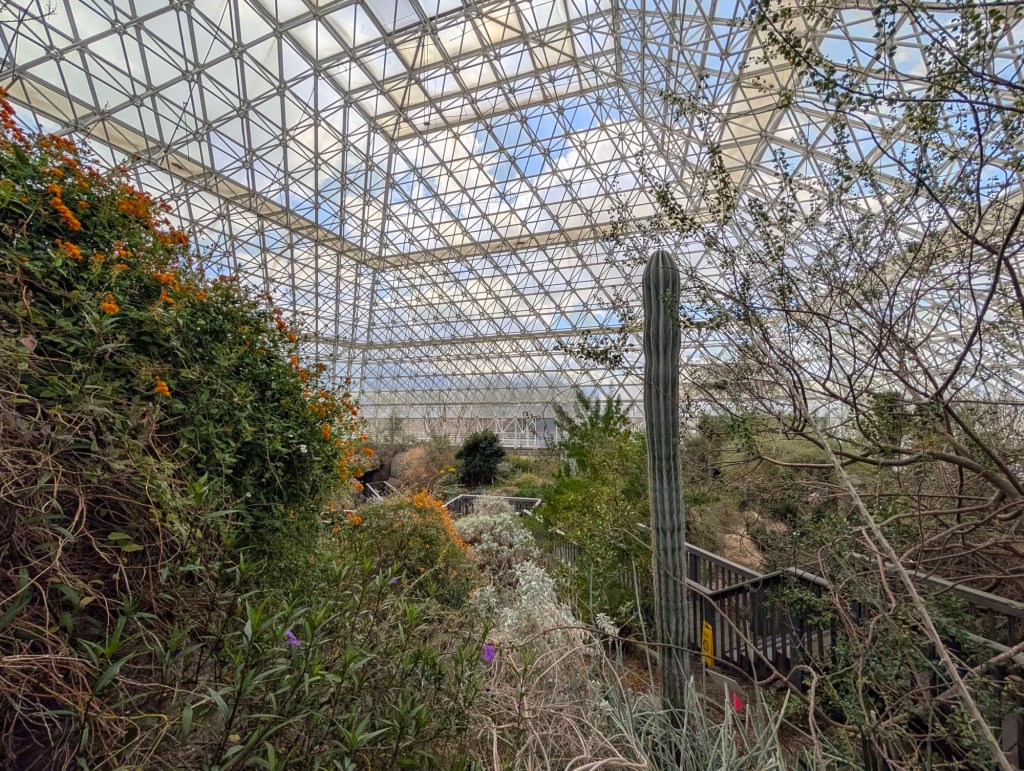
As for our own visit, there was an audio guide tour available through our cell phones that explained the various sections of the habitat. Many areas were like the Mitchell Park domes in Milwaukee with individual habitats with their own humidity and heat being generated to create a microclimate. The audio tour provided a lot of dry facts and scientific info and such, but as I explained to Nicole, “I want the goss. Who was doing who? And who eventually broke down and ordered the pizza?” The audio guide wasn’t going to tackle these topics, and we ended up with more questions than answers.
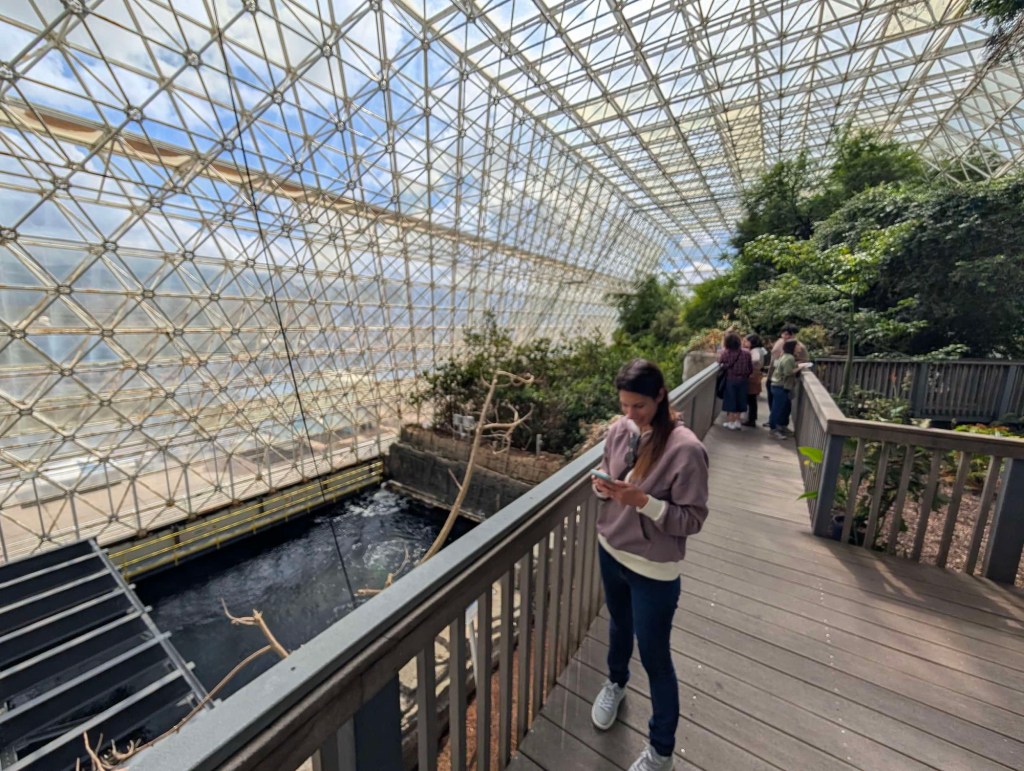
As much as I joked about it, Biosphere 2 has actually been helpful after the original Biospherians mission back in the early 1990s. Ownership changed and the overall mission did as well. Most of the original biospherians weren’t proper scientists. They merely learned tasks by doing them. As ownership was transferred to more scientifically-minded groups and eventually the University of Arizona, actual breakthroughs happened now that hangry, oxygen-deprived humans were removed from the equation. There is a section that has a micro ocean with its own coral. This is where scientists first learned of coral bleaching as a result of elevated water temperatures, and are experimenting with how to protect coral from it in the future.

After driving the hour back to Tucson, we relaxed for a spell on top of the Graduate Hotel before I went for a run and eventually got ready for a pointless round trip to Phoenix and back to Tucson. Nicole was able to kill time whilst I was flying and met me at the Courtyard Marriott by the Tucson airport. While not as nice as perhaps the Graduate, it did the job. We relaxed for the evening before Nicole had to fly back the following day to LAX — on a separate flight from me because mine was (sigh) delayed…
 Flyin' Brian